
 Follow on X
Inflation Is Cooling. So Why Do So Many Americans Still Feel Broke?
A better than expected inflation report offered encouraging signs for the economy, but for many families struggling with housing, groceries, and everyday expenses, the cost of living still feels far from under control.
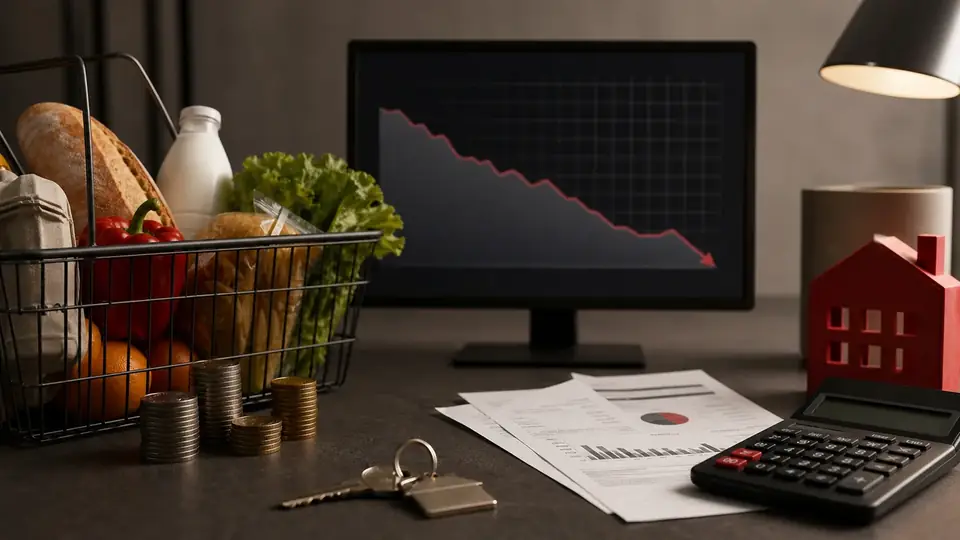
New inflation data released this week came in better than many economists expected, offering another sign that price increases may be slowing.
Consumer prices rose 3.5 percent in June compared to one year ago, down from 4.2 percent in May and below the 3.8 percent many economists had forecast.
The White House pointed to the report as evidence that the economy continues moving in the right direction.
The Federal Reserve, however, cautioned that the fight against inflation is far from over.
For many Americans, both statements can feel true at the same time.
Inflation Is Slowing, But Prices Are Still Rising
One of the biggest misconceptions surrounding inflation is that lower inflation means lower prices.
It does not.
The latest Consumer Price Index shows prices are still increasing compared to last year. They are simply increasing more slowly than they were a month ago.
That distinction matters.
The report exceeded many economists’ expectations and suggests inflationary pressures may be easing. But families buying groceries, paying rent, or filling their gas tanks are still paying more than they were a year ago.
The pace of inflation is slowing.
The cost of living is not.
Why the Economy Feels Different Than the Headlines
President Donald Trump welcomed the report as further evidence that the economy is strengthening, pointing to record employment, expanding manufacturing, and new investments in artificial intelligence and automobile production.
Economic indicators do support parts of that message.
Employment remains historically strong, manufacturing investment has increased in several sectors, and inflation has moderated from recent highs.
Yet those macroeconomic trends do not always match what families experience at home.
Parents standing in the grocery aisle are not comparing month over month inflation rates. They are comparing today’s grocery bill with what they paid several years ago.
Even if inflation slows, prices rarely return to previous levels.
The Housing Problem Has Not Gone Away
Housing remains one of the biggest challenges facing middle class Americans.
Many younger buyers say they followed the traditional financial advice. They worked, saved money, built their credit, and still cannot afford their first home.
The reason is not simply home prices.
Interest rates have fundamentally changed affordability.
Even when home prices remain relatively stable, higher mortgage rates can add hundreds or even thousands of dollars to a monthly payment compared to just a few years ago.
For many first time buyers, the monthly payment has become a larger obstacle than the purchase price itself.
That reality has fueled growing frustration and countless jokes online about needing to have bought a home decades ago just to have a chance at homeownership today.
The Federal Reserve Faces a Difficult Balancing Act
Federal Reserve officials say inflation remains too high and have maintained higher interest rates in an effort to restore long term price stability.
Chairman Kevin Warsh recently acknowledged that elevated inflation has placed an undue burden on American households and businesses while reaffirming the Fed’s commitment to reducing inflation.
But the same interest rates helping slow inflation also increase borrowing costs.
Homes become more expensive to finance.
Car loans become more expensive.
Credit card debt becomes more expensive.
Small businesses face higher financing costs.
The very policy designed to reduce inflation also places additional pressure on many household budgets.
The Politics of the Economy
As expected, both political parties are highlighting different parts of the report.
Republicans point to cooling inflation, strong employment, and continued economic growth.
Democrats continue emphasizing the high cost of housing, healthcare, childcare, and other essentials that many families continue struggling to afford.
Senator Elissa Slotkin recently argued that the greatest threat facing the United States is the threat to the American Dream, reflecting broader concerns about affordability and economic opportunity.
Both narratives find support in today’s data.
Inflation is cooling.
Prices remain elevated.
More Americans are working.
Many still struggle to buy a home or build savings.
The Bigger Question
Economic reports can tell us where inflation is headed.
They cannot tell us how Americans feel when they pay their bills.
This month’s inflation report is encouraging. It suggests the economy may be moving in the right direction and that efforts to slow inflation are producing measurable results.
But for millions of middle class families, the question is not whether inflation fell from 4.2 percent to 3.5 percent.
The question is much simpler.
Is their paycheck finally catching up to the cost of living?
For many Americans, the answer is still no.