
 Follow on X
Trump’s Prime-Time Address Reignites Election Security Debate
The president’s prime-time address shifted the national conversation back to election security, drawing swift reactions from lawmakers, media organizations, and foreign governments.
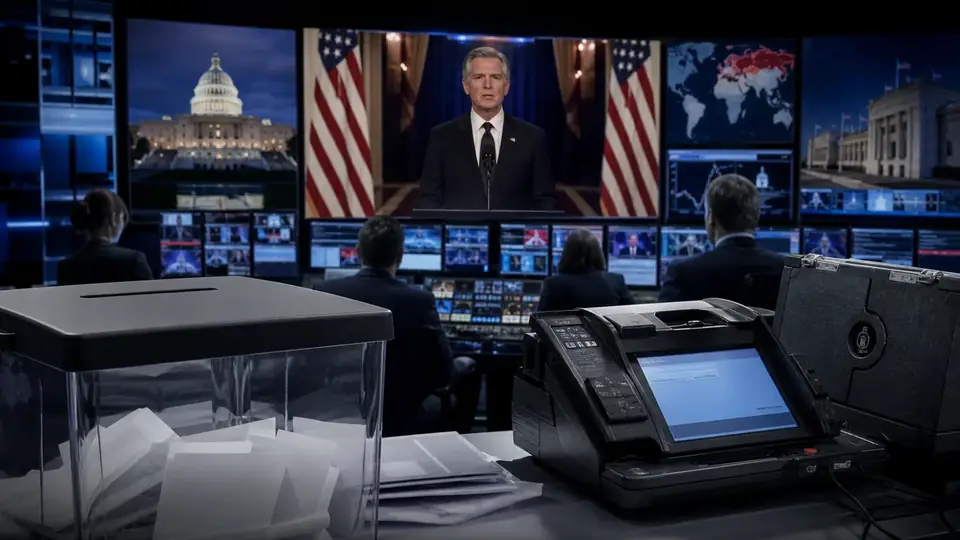
President Donald Trump delivered what he called the “most important speech” of his presidency Thursday evening, unveiling newly declassified intelligence documents that he says reveal foreign efforts to target the 2020 U.S. election. While the White House insists the initiative is focused on strengthening future election security rather than relitigating the last presidential race, the address immediately reignited a national debate over election integrity, media responsibility, and the distinction between foreign influence and election interference.
White House Says Focus Is on Preventing Future Threats
During the prime-time address, Trump argued that Americans deserve greater transparency regarding intelligence surrounding foreign activity during the 2020 election. Administration officials framed the release as an effort to expose vulnerabilities and prevent similar threats from occurring again.
Sen. Markwayne Mullin echoed that message, emphasizing the administration’s stated objective.
“This isn’t about rehashing the 2020 election… this is just exposing what took place and to make sure it never happens again.”
The White House has also tied the speech to its broader push for additional election security legislation ahead of the 2026 midterm elections.
Media Coverage Sparks a Debate Over Gatekeeping
Almost immediately, attention shifted from the documents themselves to how the speech was covered.
CBS aired portions of Trump’s address, while several other major broadcast networks chose not to carry the speech live. Their decisions prompted criticism from supporters who argue Americans should have the opportunity to hear the president directly and draw their own conclusions.
Others defended the networks’ editorial decisions, arguing that broadcasters have a responsibility not to amplify claims they believe are unsupported by available evidence.
Sen. Mark Warner criticized the media coverage during an interview, saying:
“I was embarrassed that the President of the United States… networks like yours carried this as news… it is incumbent upon you and any responsible journalist to push back on this.”
The differing approaches have fueled a broader discussion about the role of legacy media in an era where millions of Americans receive news through social media platforms, podcasts, livestreams, and independent digital outlets rather than traditional television broadcasts.
China and Russia Reject Allegations
International reaction followed quickly.
Both China and Russia rejected allegations that they manipulated the 2020 U.S. election, calling the accusations baseless and denying involvement.
Their responses mirror previous statements from both governments following earlier U.S. intelligence assessments concerning foreign election activities.
Intelligence Experts Continue to Distinguish Influence from Interference
While debate continues over the newly released documents, intelligence experts continue to emphasize an important distinction between foreign influence campaigns and actual interference with election systems.
Associated Press national security reporter Eric Tucker explained that foreign governments routinely attempt to influence American public opinion but that this differs significantly from altering votes.
“I think it’s really important to make a distinction between influence and interference… there is no question there was abundant foreign influence… that’s a totally different question than whether a foreign adversary reaches into voting machines… and switches the vote.”
That distinction has remained central to U.S. intelligence assessments for years.
Multiple intelligence agencies have concluded that foreign adversaries, including Russia, China, and Iran, have engaged in influence operations aimed at shaping American public opinion through propaganda, cyber activity, and online disinformation campaigns. At the same time, those assessments have not found verified evidence that foreign governments successfully altered vote tabulations during the 2020 presidential election.
Election Security Returns to the Political Spotlight
Beyond the renewed debate over 2020, the administration is using the moment to advocate for additional election security reforms before the 2026 midterm elections.
Whether the newly declassified intelligence changes public opinion remains to be seen. But the speech has already shifted the national conversation back toward election security, transparency, media coverage, and the continuing debate over how foreign adversaries seek to influence American democracy.