
 Follow on X
Beyond the Battlefield: How Global Wars Could Trigger the Next Food Crisis
As conflicts in Ukraine and the Middle East place growing pressure on energy, fertilizer, and global shipping, experts warn the greatest humanitarian consequences may emerge far from the front lines.
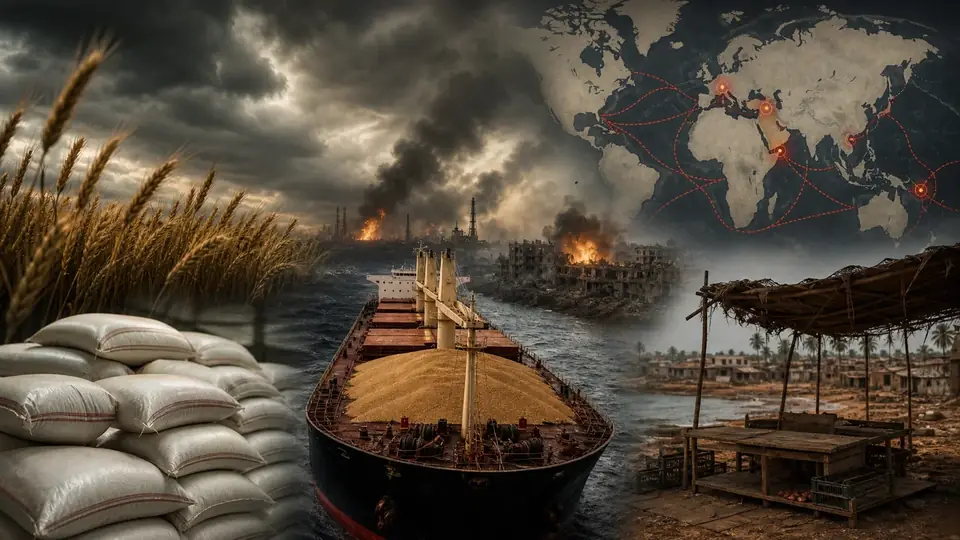
While much of the world’s attention remains focused on the wars in Ukraine and Iran, some analysts argue the bigger story may not be unfolding on the battlefield at all.
Instead, they point to a growing convergence of disruptions affecting the systems that keep the global economy running: energy production, fertilizer manufacturing, grain exports, and international shipping.
Commentators and geopolitical analysts, including Mike Adams, have argued that these overlapping pressures could develop into a much larger global supply chain crisis than many people currently recognize.
Modern wars are fought through infrastructure
Modern warfare extends far beyond missiles, drones, and armored vehicles.
It also targets the infrastructure that supports everyday life.
Natural gas facilities produce fertilizer. Grain terminals move harvests to international markets. Ports load cargo ships. Strategic waterways allow food, fuel, and manufactured goods to move around the globe.
When that infrastructure is damaged or disrupted, the effects rarely remain local. Instead, they ripple through international supply chains, often reaching countries with no direct involvement in the conflict.
The war in Ukraine has already disrupted grain exports, fertilizer markets, and European energy supplies for several years. More recent reports also indicate that Ukrainian strikes have targeted infrastructure connected to Russian grain storage and export facilities.
Because Russia remains one of the world’s largest wheat exporters, damage to warehouses, ports, or export terminals has the potential to reduce supplies reaching global markets and place additional pressure on food prices.
Shipping choke points are under growing pressure
Beyond the fighting itself, several of the world’s most important maritime corridors are facing increasing strain.
The ongoing Houthi campaign in the Red Sea continues to threaten commercial shipping through one of the world’s busiest trade routes, affecting traffic moving through the Suez Canal and forcing many vessels to take the significantly longer journey around the southern tip of Africa.
Now, the conflict involving Iran has placed another critical shipping corridor under intense scrutiny.
The Strait of Hormuz carries roughly one fifth of the world’s oil supply, making it one of the most strategically important waterways on the planet.
At the same time, reports of fires and explosions affecting energy infrastructure throughout the Gulf region have raised new concerns about the resilience of global liquefied natural gas exports.
Among the facilities drawing particular attention is Qatar’s Ras Laffan complex, the world’s largest liquefied natural gas export facility.
Any significant disruption to its operations would extend well beyond higher energy prices.
Energy and food are more closely connected than many realize
One of the least understood links in the global food system is the relationship between natural gas and fertilizer.
Natural gas serves as the primary feedstock used to manufacture nitrogen fertilizer through the Haber Bosch process.
Without adequate fertilizer production, farmers harvest lower crop yields.
Lower yields reduce food supplies.
Reduced supplies increase prices.
And in lower income countries already struggling with food insecurity, rising prices can quickly translate into widespread hunger.
This is why many supply chain experts focus as much attention on fertilizer plants, natural gas facilities, grain silos, oil refineries, and export terminals as they do on military developments.
One disruption can often be absorbed.
Two can usually be managed.
But when multiple critical systems begin experiencing simultaneous pressure, the risks become far more difficult to contain.
Another strategic chokepoint enters the conversation
Attention is also turning toward another critical artery of global commerce.
The Strait of Malacca carries approximately seven times more maritime traffic than the Panama Canal and serves as one of the primary routes connecting energy producers in the Middle East and Africa with manufacturing centers across Asia.
Any major disruption there would affect not only oil shipments but also manufactured goods, raw materials, and consumer products that support global supply chains.
For logistics experts, these transportation corridors often reveal more about future economic risks than battlefield maps alone.
History shows the greatest consequences often come later
The most devastating effects of war frequently emerge long after the fighting subsides.
Empty store shelves.
Failed harvests.
Fertilizer prices beyond the reach of farmers.
Humanitarian organizations unable to meet growing demand.
The global food price spikes of 2008 contributed to political instability across multiple countries.
More recently, disruptions following Russia’s invasion of Ukraine helped drive significant increases in food, fertilizer, and energy prices throughout much of the world.
The concern now is whether multiple wars, multiple shipping disruptions, and repeated attacks on critical infrastructure could combine to create even greater pressure on the global food system.
The risks are real, but the outcome remains uncertain
The scale of any future food crisis remains difficult to predict.
Much depends on how long current conflicts continue, whether major shipping routes remain open, how quickly energy and fertilizer production recover, and how effectively global supply chains adapt.
Still, international organizations continue to warn that the underlying risks are growing.
The United Nations has repeatedly stated that armed conflict, economic instability, and climate related shocks are already driving record levels of global food insecurity.
The countries most vulnerable are often those least responsible for the conflicts themselves.
Nations such as Yemen, Somalia, Sudan, and parts of South Asia and sub Saharan Africa remain particularly vulnerable to disruptions in food imports and humanitarian aid.
If energy supplies become constrained, fertilizer production declines, grain exports continue to shrink, and strategic shipping lanes remain under pressure, the greatest casualties may not be soldiers on distant battlefields.
They may be families thousands of miles away who simply cannot afford, or produce, their next meal.
The world often measures war through military advances, casualty reports, and territorial gains.
But history suggests that some of its most devastating consequences arrive quietly, months or even years later.
Sometimes the most destructive weapon is not a missile.
It is an empty plate.