
 Follow on X
Conflicting Messages from Washington Raise New Questions About U.S. Strategy Toward Iran
As military operations expand across the region, President Trump’s recent remarks have fueled uncertainty over whether Washington is preparing for further escalation, pursuing renewed diplomacy, or attempting to do both simultaneously.
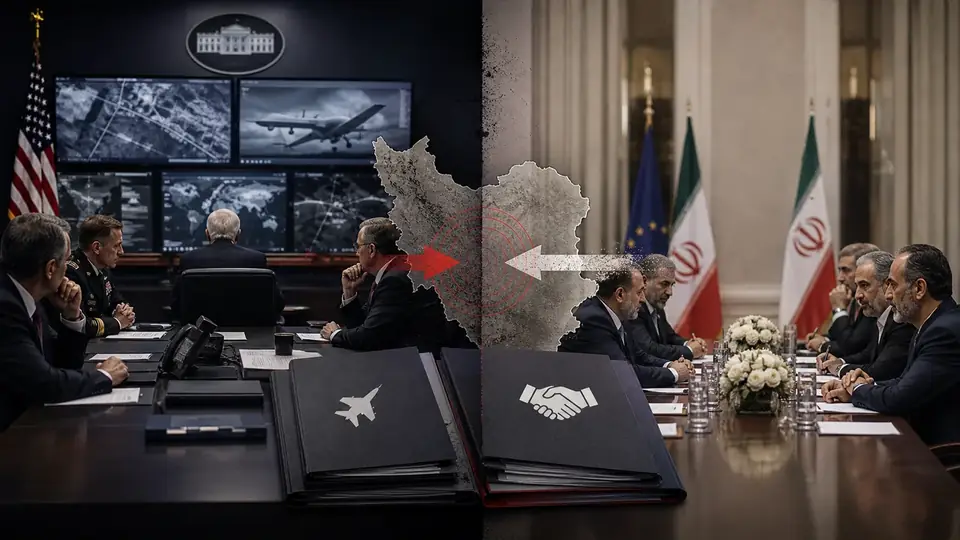
The situation between the United States and Iran continues to evolve rapidly, with military operations intensifying even as officials continue to discuss the possibility of renewed negotiations.
Over the past 48 hours, statements coming from Washington have appeared to point in different directions, leaving observers questioning the administration’s long-term strategy.
While military strikes continue across the region, President Donald Trump has alternated between signaling additional escalation and expressing optimism that a diplomatic agreement may still be possible.
Trump Raises Possibility of Seizing Kharg Island
During remarks at the NATO summit on Wednesday, President Trump discussed the possibility of targeting—or even taking control of—Kharg Island, one of Iran’s most strategically important oil export facilities.
Kharg Island serves as the primary terminal for much of Iran’s crude oil exports, making it one of the country’s most valuable pieces of economic infrastructure.
The comments suggested that Washington may be prepared to significantly expand military pressure beyond recent strikes.
Hours Later, the President Signals Openness to a Deal
Only hours after those remarks, however, President Trump offered a markedly different message.
When asked why Iran would continue attacking commercial vessels if it genuinely wanted negotiations, the president acknowledged Iran’s recent actions but also stated that Tehran “wants to make a deal very badly,” adding that Iranian officials had recently reached out.
The contrast between the two statements has raised questions about whether the administration is pursuing a strategy centered on military escalation, diplomatic negotiations, or a combination of both.
Military Operations Continue to Expand
Regardless of the diplomatic rhetoric, military activity has continued.
The United States says it has struck more than 170 targets inside Iran over the past two days as part of its ongoing campaign.
Iran, meanwhile, has announced retaliatory strikes targeting American military facilities across the region, including installations in Kuwait, Bahrain, Qatar, and Jordan.
According to Iranian statements, those operations have targeted Patriot missile batteries, fuel storage facilities, military bases, and other strategic infrastructure.
Independent assessments of the damage continue to emerge, but both sides appear to be broadening the scope of their military operations.
Ceasefire Exists on Paper, but Fighting Continues
The latest developments have created an unusual situation.
Officially, diplomatic channels between Washington and Tehran remain open.
Officially, negotiations have not been completely abandoned.
At the same time, however, military strikes continue, new targets are being announced, and both governments continue issuing increasingly forceful public statements.
The result is a diplomatic process that continues to exist alongside an expanding military confrontation—a ceasefire that appears increasingly difficult to distinguish from active conflict.
Strategic Questions Remain Unanswered
The conflicting messages have left several key questions unresolved.
If diplomacy remains the preferred outcome, what would a successful agreement now look like after the recent escalation?
If military pressure is intended to force Iran back to the negotiating table, how much further is Washington prepared to go?
And if both the United States and Iran believe additional military pressure will compel the other side to change course, what happens if neither government is willing to back down?
Those questions extend beyond politics.
They are strategic questions that could determine not only the future of U.S.-Iran relations, but also the stability of the broader Middle East, global energy markets, and international shipping.
For now, despite continued diplomatic signals from both sides, the ultimate direction of the conflict remains uncertain.