
 Follow on X
Is the Trump Administration’s Crackdown on Cuban Doctors Hurting the World’s Poor?
As Washington intensifies pressure on Cuba’s overseas medical missions, supporters call it a crackdown on forced labor while critics warn it could deepen Cuba’s humanitarian crisis and leave millions in developing nations without access to essential healthcare.
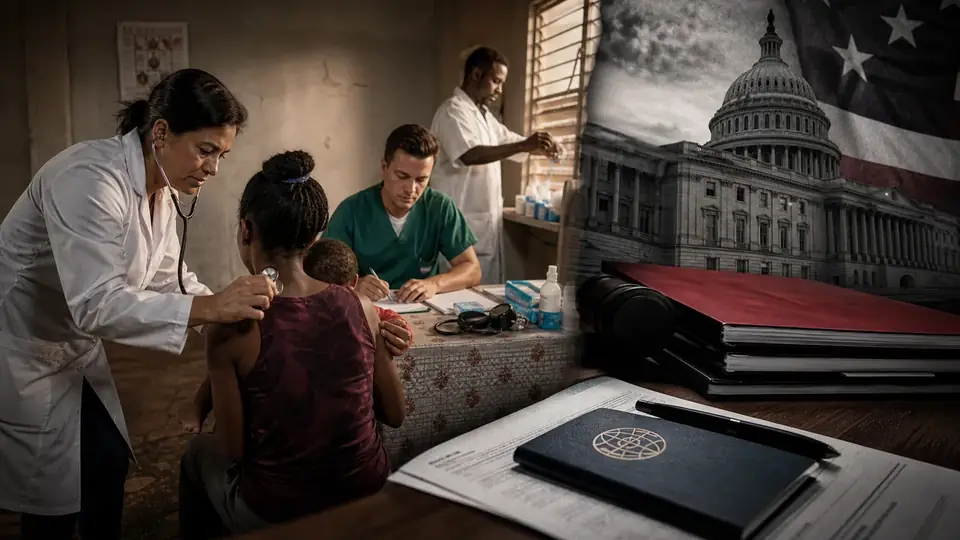
The Trump administration says Cuba’s overseas medical missions amount to forced labor and exploitation. But critics argue the campaign threatens one of the world’s largest international healthcare programs while dealing another blow to Cuba’s already struggling economy. The debate raises a broader question: Are these sanctions targeting the Cuban government, or are they primarily affecting ordinary people both inside and outside Cuba?
For decades, Cuba has sent doctors, nurses, and medical specialists to more than 50 countries, providing healthcare in some of the world’s poorest and most underserved regions. Cuban medical teams have performed everything from routine primary care and cataract surgeries to complex brain surgeries, often in countries facing severe physician shortages.
The Trump administration is now pressuring governments around the world to terminate those agreements.
Secretary of State Marco Rubio argues the program constitutes forced labor because the Cuban government receives payments from host countries while doctors are paid only a portion of that revenue. The administration says the missions enrich the Cuban government while exploiting medical workers and has urged foreign governments to end their participation.
Cuba’s Economic Lifeline
The medical missions are far more than a humanitarian program for Cuba.
At their peak, they generated roughly $8 billion annually for the Cuban economy. In 2024, they reportedly brought in approximately $5.3 billion, accounting for nearly half of Cuba’s total export earnings.
That makes the program one of Cuba’s last major sources of foreign currency as the country struggles with prolonged economic decline.
If countries abandon the program under U.S. pressure, Cuba could lose billions in annual revenue at a time when the island is already experiencing widespread shortages of food, fuel, medicine, and electricity.
Pressure Extends Beyond Cuba
The administration’s campaign is not limited to encouraging countries to cancel contracts.
Rubio has also warned that the United States could revoke visas for foreign government officials who continue participating in Cuba’s medical missions.
That has prompted pushback from several Caribbean leaders, who argue their healthcare systems depend heavily on Cuban physicians and that they simply do not have enough doctors to replace them.
Some governments have also warned that recent U.S. actions are affecting medical education partnerships, limiting opportunities for their students to train in Cuba before returning home to practice medicine.
For many smaller nations, losing Cuban medical personnel could leave hospitals and clinics without enough healthcare workers to meet basic needs.
Cuba’s Humanitarian Crisis
The debate comes as Cuba faces one of its most difficult economic periods in decades.
The country continues to struggle with rolling blackouts, fuel shortages, food insecurity, and repeated failures of its electrical grid. Years of U.S. sanctions have compounded those challenges by restricting Cuba’s access to international financing, imports, and energy supplies.
Supporters of the administration argue those sanctions are necessary to pressure the Cuban government and hold it accountable for alleged human rights abuses and labor exploitation.
Critics argue the restrictions have instead placed much of the burden on ordinary Cuban citizens.
A 2026 report cited by the Los Angeles Times found that tightening U.S. sanctions likely contributed to worsening health outcomes in Cuba, including a reported 148 percent increase in infant mortality between 2018 and 2025, as shortages of medicine, medical equipment, fuel, and other essential resources intensified.
The Bigger Question
The Trump administration maintains that Cuba’s overseas medical missions exploit healthcare workers and generate revenue for an authoritarian government.
Opponents argue the missions also provide critical healthcare for millions of people living in countries with severe doctor shortages while serving as one of Cuba’s few remaining economic lifelines.
That leaves a larger policy question.
If the goal is to pressure the Cuban government, do measures targeting its most important export accomplish that objective, or do they primarily deepen the humanitarian crisis for ordinary Cubans and reduce access to healthcare for some of the world’s poorest populations?
The answer depends largely on whether these medical missions are viewed primarily as a system of labor exploitation or as an essential source of healthcare and economic survival. That debate is likely to intensify as more countries decide whether to continue participating in the program under increasing pressure from Washington.