
 Follow on X
Is the United States Really Planning to Take Control of the Strait of Hormuz?
President Trump says the United States should take control of the Strait of Hormuz and charge ships a toll to pass through it, but the proposal has raised questions about whether Washington is applying a different standard to itself than it does to other nations and whether the conflict with Iran has fundamentally shifted away from nuclear enrichment toward control of one of the world’s most important waterways.
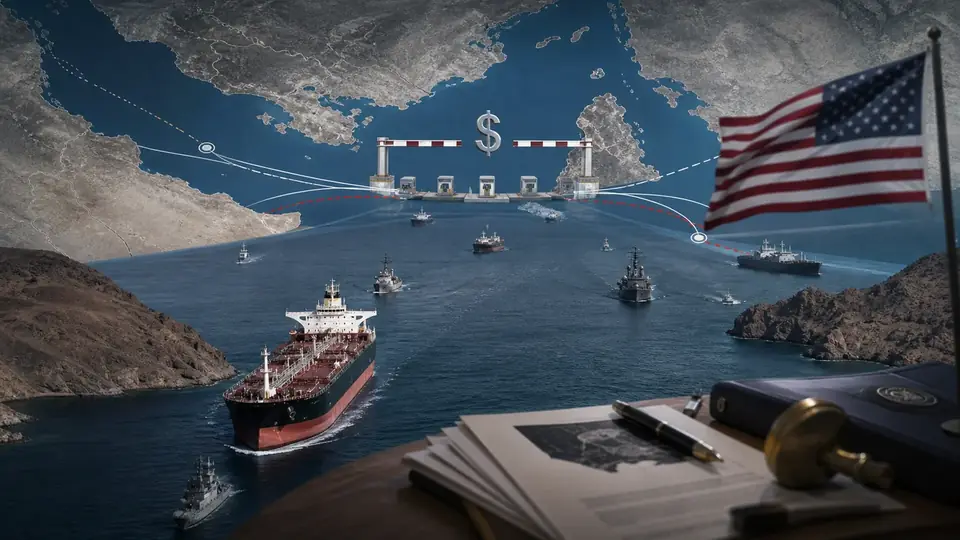
President Donald Trump sparked a new controversy after announcing that the United States would take control of the Strait of Hormuz and charge commercial vessels to transit the strategic shipping lane. Trump argued that because the United States bears much of the burden of securing the waterway, it should be reimbursed for doing so.
“We’re taking over the Strait of Hormuz,” Trump said. “The United States will be reimbursed for its control over the Strait.”
The comments immediately attracted attention because they appeared to conflict with statements made only weeks earlier by Secretary of State Marco Rubio.
A Different Standard?
In a previous interview, Rubio stated that “no country is allowed to charge tolls or fees on an international waterway.”
That statement has become central to the criticism now surrounding Trump’s proposal. For years, U.S. officials have condemned suggestions that Iran could impose restrictions or fees on commercial traffic through the Strait of Hormuz. Critics now argue that Washington is embracing the very concept it has long opposed.
The comparison has fueled accusations of a double standard. If Iran proposed charging ships to pass through the strait, critics argue it would likely be condemned as coercion. When the United States proposes doing so, the administration describes it as fair reimbursement for providing security.
Iran Responds With Sarcasm
Tehran wasted little time responding.
Iran’s foreign minister sarcastically agreed that tolls should be charged but argued that Trump’s reported proposal of a 20 percent fee was excessive and that Iran would impose a more reasonable rate instead.
The response appeared designed less as a serious policy proposal than as an attempt to turn Washington’s own reasoning back on itself, highlighting what Iranian officials see as inconsistent U.S. arguments about international waterways.
The Conflict Has Shifted
The larger issue extends far beyond transit fees.
For months, the confrontation between Washington and Tehran centered primarily on Iran’s nuclear enrichment program and fears that the country could eventually develop a nuclear weapon. Increasingly, however, the conflict appears to be centered on control of the Strait of Hormuz itself.
That shift is significant because the strait remains one of the world’s most strategically important maritime chokepoints, carrying roughly one fifth of global seaborne oil shipments.
As military operations continue, the focus has increasingly turned toward protecting or controlling that critical passage rather than solely preventing future nuclear development.
Military Operations Continue
The United States has continued striking Iranian missile facilities, naval bases, drone infrastructure, and other military targets.
Iran has reportedly responded by targeting shipping and energy infrastructure throughout the Persian Gulf, further escalating tensions and raising concerns about disruptions to global energy markets.
Taken together, the recent military activity suggests the conflict is evolving beyond its original focus. Increasingly, it appears to be a struggle over who controls access to one of the world’s most important energy corridors.
Expanding the Debate
The discussion has become even more contentious following reports that some retired military commanders have publicly floated the idea of seizing Iranian territory, including Kharg Island, one of Iran’s primary oil export terminals, and using it as leverage in future negotiations.
While those proposals do not represent official U.S. policy, they have intensified debate over how far the conflict could escalate and whether such actions would be consistent with the international legal principles Washington frequently invokes.
The Bigger Question
The Strait of Hormuz has long been recognized as one of the world’s most important waterways. What makes the current moment different is that the conversation is no longer focused exclusively on defending freedom of navigation.
It is increasingly about who exercises control over the waterway, who has the authority to regulate global commerce moving through it, and whether different rules are being applied depending on which country is exercising that power.
Supporters argue the United States is acting to preserve stability and protect international trade. Critics contend Washington is asserting powers it has historically condemned when proposed by its adversaries.
The central question, then, is not whether the Strait of Hormuz matters. Its importance is beyond dispute.
The question is whether the United States is moving toward a temporary security arrangement during an ongoing conflict, a broader policy of controlling one of the world’s most important shipping lanes, or something more permanent. As the fighting continues and the rhetoric escalates, the dispute appears to be evolving into something much larger than the nuclear standoff that first brought the two countries to the brink of war.