
 Follow on X
Trump Reportedly Presses Israel to Pull Back While U.S. Signals a Different Course
Reports say President Trump urged Israel to withdraw forces from Syria and Lebanon to avoid a wider regional war. At the same time, Washington is discussing blockades, military pressure on Iran, and a possible withdrawal from Iraq, leaving questions about the administration’s overall strategy.
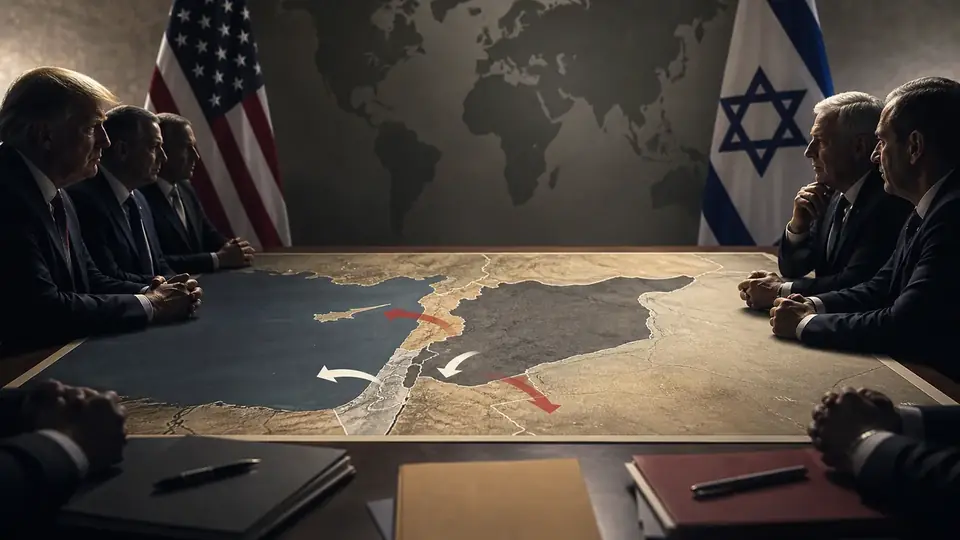
A new report claims President Donald Trump has personally urged Israeli Prime Minister Benjamin Netanyahu to begin withdrawing Israeli forces from both Syria and Lebanon.
According to Axios, the White House believes Israel’s continued military presence in both countries is increasing the risk of a much broader regional conflict.
If accurate, the request would represent one of the clearest signs yet that Washington is attempting to prevent further escalation between Israel and its neighbors.
At the same time, however, other developments suggest the United States may be moving in a very different direction.
The Report Behind the Headlines
The report comes from Axios reporter Barak Ravid, who has frequently broken stories involving sensitive discussions between Washington and Jerusalem.
Some of Ravid’s reporting has been met with skepticism when first published, particularly stories suggesting disagreements between Trump and Netanyahu.
However, several of those reports, including claims that Trump privately criticized Netanyahu, were later confirmed.
That history has led many observers to take the latest report seriously, even as neither government has publicly confirmed the details.
A Changing Message on the Strait of Hormuz
While reports suggest the White House wants Israel to reduce military activity, President Trump has simultaneously announced new measures involving the Strait of Hormuz.
Earlier, the president floated the idea of the United States collecting a 20 percent toll from ships passing through the strategically vital waterway in exchange for providing security.
Less than twenty four hours later, that proposal disappeared.
Instead, Trump argued that no country should charge tolls on an international waterway and said the United States would pursue trade and investment agreements with Gulf nations instead.
He also suggested that China, rather than commercial shipping companies, should compensate the United States for securing the Strait because of Beijing’s heavy reliance on energy shipments passing through the region.
The rapid shift left many observers struggling to understand what the administration’s policy actually is.
What Would a Blockade Look Like?
Beyond the changing rhetoric lies a more practical question.
How would the United States enforce a blockade of one of the busiest shipping lanes in the world?
Reports indicate Iran has already responded by targeting vehicles operating near the Strait.
But many operational questions remain unanswered.
Which vessels would be stopped?
What rules of engagement would govern enforcement?
What would happen if an Iranian vessel refused to comply?
Without those details, analysts say it remains difficult to understand how such a policy would function in practice.
Pulling Out of Iraq While Increasing Pressure on Iran?
The administration’s messaging became even more complicated after President Trump reportedly told Iraq’s prime minister that the United States no longer believes it needs troops stationed in Iraq.
For decades, Iraq has served as one of America’s primary strategic positions in the Middle East, providing logistical support and operational access throughout the region.
Reducing that military footprint while simultaneously increasing pressure on Iran appears contradictory to some analysts.
One policy suggests deescalation.
The other suggests expanded confrontation.
Mixed Signals on Iran
President Trump also recently addressed questions about Iran’s alleged Pickaxe Mountain nuclear facility.
Rather than dismissing the possibility of further military action, he warned that Iran should “be ready,” fueling additional speculation that new operations could be under consideration.
That rhetoric contrasts sharply with reports that the White House is encouraging Israel to reduce military activity in Syria and Lebanon to prevent a wider regional war.
Taken together, the messages point in different directions.
One suggests restraint.
The other suggests continued escalation.
The Bigger Question
If the reported conversations with Israel are accurate, the administration appears concerned that further Israeli military operations could ignite a broader regional conflict.
Yet at the same time, Washington continues discussing naval operations in the Strait of Hormuz, increasing pressure on Iran, and issuing warnings that more military action could follow.
Adding to the uncertainty are reports that the United States may reduce its military presence in Iraq, one of its most important strategic positions in the region.
Taken individually, each policy can be explained.
Taken together, they present a far less coherent picture.
The central question is no longer whether the United States is trying to reduce tensions or increase pressure.
It is whether Washington is pursuing a single strategy at all.
Because in the Middle East, mixed signals rarely stay theoretical for long.
They often become real world consequences.